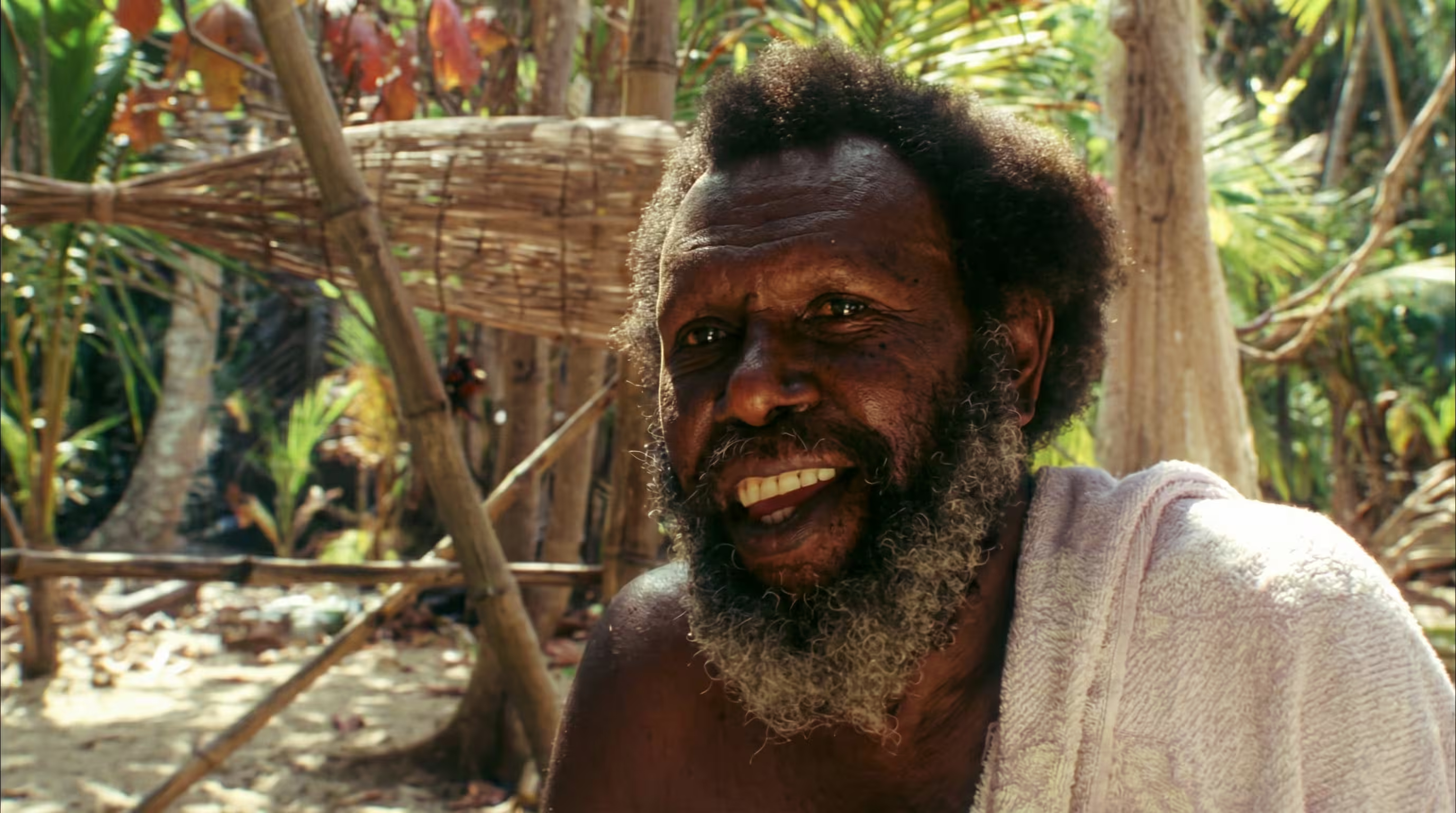
Early Life
Eddie Koiki Mabo was born on 29 June 1936 on Mer (Murray Island) in the Torres Strait. A Meriam man, he was raised by his uncle Benny Mabo after his mother died shortly after his birth. Growing up on Mer, he developed a deep connection to the land and sea, and an intimate understanding of Meriam customary law regarding land ownership.
As a young man, Mabo was exiled from Mer for breaking traditional law. He moved to mainland Australia, working as a cane cutter, railway fettler, and gardener. He settled in Townsville with his wife Bonita, where he became involved in the union movement and Aboriginal and Torres Strait Islander rights campaigns.
The Fight for Land Rights
In 1974, during a conversation at James Cook University, Mabo learned that under Australian law, his family's traditional lands on Mer were considered Crown land, that the Australian legal system did not recognise his people's ownership of land they had cultivated and lived on for thousands of years. This revelation would set him on a path that would change Australian law forever.
Mabo became a passionate advocate for Indigenous land rights. He helped establish the Black Community School in Townsville and worked tirelessly to support Torres Strait Islander communities on the mainland. In 1981, at a land rights conference at James Cook University, lawyers and academics recognised the potential for a legal challenge to the doctrine of terra nullius.
Mabo v Queensland
In 1982, Eddie Mabo and four other Meriam people (Sam Passi, David Passi, Celuia Mapoo Salee, and James Rice) launched their case in the High Court of Australia. The case, Mabo v Queensland (No 2), argued that the Meriam people held native title to their lands on Mer.
The legal battle lasted ten years. During this time, the Queensland Government passed the Queensland Coast Islands Declaratory Act 1985 in an attempt to extinguish any native title rights. The High Court struck down this legislation as inconsistent with the Racial Discrimination Act 1975.
Tragically, Eddie Mabo died of cancer on 21 January 1992, just five months before the High Court delivered its historic decision on 3 June 1992. In a 6-1 ruling, the court found that the Meriam people held native title to their lands, overturning the 200-year-old doctrine of terra nullius, the legal fiction that Australia was "land belonging to no one" prior to British colonisation.
Legacy
The Mabo decision is considered the most significant legal decision in Australian history regarding Indigenous land rights. It led directly to the Native Title Act 1993, which established a framework for recognising and protecting native title throughout Australia.
Eddie Mabo was posthumously awarded the Australian Human Rights Medal in 1992. 3 June is observed annually as Mabo Day, commemorating the anniversary of the High Court decision. His story has been told in the acclaimed 2012 film Mabo and numerous documentaries.
His courage in challenging the legal foundations of colonisation has inspired generations of Indigenous Australians and fundamentally reshaped the relationship between Indigenous peoples and the Australian legal system.