Early Life
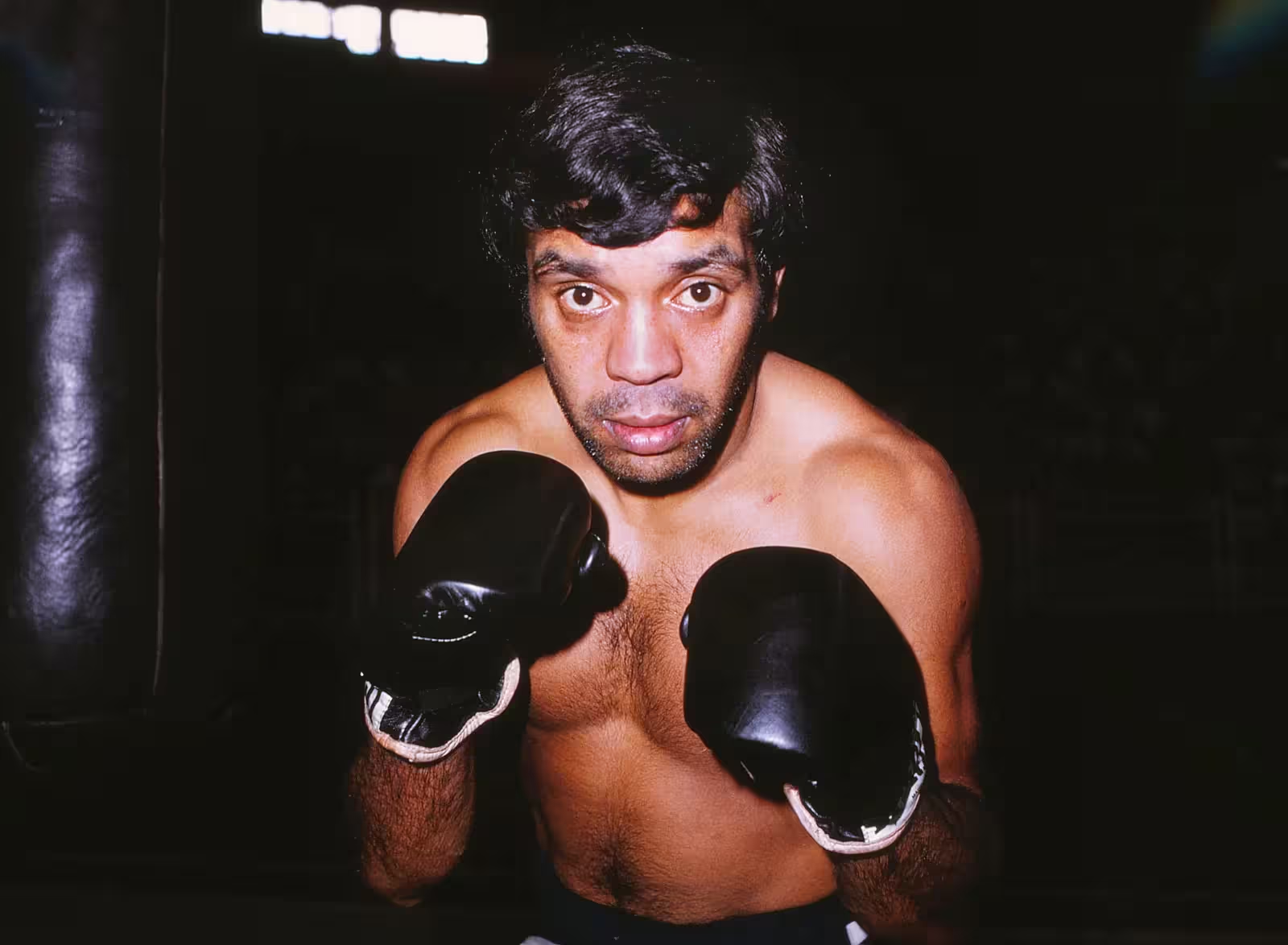
Lionel Edmund Rose was born on 21 June 1948 at Jackson's Track, near Labertouche, Victoria. A Gunditjmara man, he grew up in a camp in the Gippsland forests, an impoverished Aboriginal settlement with no electricity or running water. He was one of ten children.
Rose was introduced to boxing by his father, Roy, who had been an amateur boxer. The young Lionel showed natural talent and toughness. He began fighting competitively as a teenager, training with legendary coach Jack Rennie in Melbourne, who became his mentor and surrogate father.
Rise to World Champion
Rose's rise through the boxing ranks was swift. He won the Australian bantamweight title in 1966 at the age of 18. On 27 February 1968, he travelled to Tokyo to challenge Masahiko "Fighting" Harada for the World Bantamweight Championship.
In front of a hostile crowd at the Nippon Budokan, Rose fought with extraordinary skill and courage. He outpointed the heavily favoured Harada over 15 rounds to claim the world title, becoming the first Indigenous Australian to win a world boxing championship.
The victory sent shockwaves through Australia. Rose returned home to a ticker-tape parade through the streets of Melbourne, attended by an estimated 250,000 people, one of the largest public celebrations in Australian history.
Fame and Celebrity
In 1968, Lionel Rose was named Australian of the Year. He was one of few athletes to receive the honour. He became one of the most famous and recognisable people in Australia, transcending sport to become a cultural icon.
Rose successfully defended his world title three times before losing it to Ruben Olivares in 1969. He continued boxing until 1976, compiling a record of 42 wins from 53 professional fights. Beyond boxing, he had a brief career as a pop singer, recording several singles and performing on television.
Later Life
After retiring from boxing, Rose struggled with the transition to civilian life. Like many athletes of his era, he had limited financial management and faced exploitation. He experienced periods of poverty and health problems.
Despite these challenges, he remained a beloved figure in Australian sporting culture. He was inducted into the Sport Australia Hall of Fame and the Australian National Boxing Hall of Fame. In 2003, he received a Centenary Medal for his services to boxing.
Legacy
Lionel Rose died on 8 May 2011 at the age of 62. He received a state funeral in Victoria, attended by thousands.
His world championship victory in 1968 was a watershed moment for Aboriginal Australians. At a time when Aboriginal people were still fighting for basic rights and recognition, Rose's triumph showed that given the opportunity, Indigenous Australians could compete and triumph on the world stage. He opened doors for generations of Indigenous athletes who followed him.