Early Life
Vincent Lingiari was born around 1908 at Victoria River Gorge in the Northern Territory. Both his parents worked on Wave Hill Station, a vast 3,500 square mile cattle station owned by the British Vestey family. Called "Tommy Vincent" by his employers, Lingiari received no formal education and began working in the stock camps at around twelve years old.
Despite becoming a head stockman—a position of considerable skill and responsibility—Lingiari initially received no wages. The first time he handled money was around 1953, when he was given £5 pocket money at the Negri River races along with other stockmen. Aboriginal workers at Wave Hill lived in tin humpies, received minimal rations, and endured conditions that Lingiari would later describe as being "treated like dogs."
The Wave Hill Walk-Off
On 23 August 1966, tired of exploitation and injustice, Vincent Lingiari led approximately 200 Gurindji workers and their families in walking off Wave Hill Station. What began as a strike for better wages and conditions soon transformed into something far more profound—a demand for the return of traditional lands.
The strikers initially camped in the bed of the Victoria River before relocating to Daguragu (known to non-Aboriginal people as Wattie Creek), a site of deep spiritual significance to the Gurindji people. In 1967, Lingiari and his fellow strikers formally petitioned the Governor-General, Lord Casey, requesting ownership of their traditional lands.
The strike would last nine years—the longest in Australian history.
National Campaign
Lingiari began travelling across Australia, speaking to unions, churches, and universities about the Gurindji cause. His quiet dignity and unwavering determination captured the national imagination and transformed a remote industrial dispute into a landmark moment in Australian history.
In 1971, Lingiari collaborated with Yolngu leader Galarrwuy Yunupingu and folk singer Ted Egan to record "Gurindji Blues," with proceeds supporting both the Gurindji community and the Aboriginal Tent Embassy in Canberra. That same year, he formed the Muramulla Gurindji Company to pursue land purchase.
The Handback
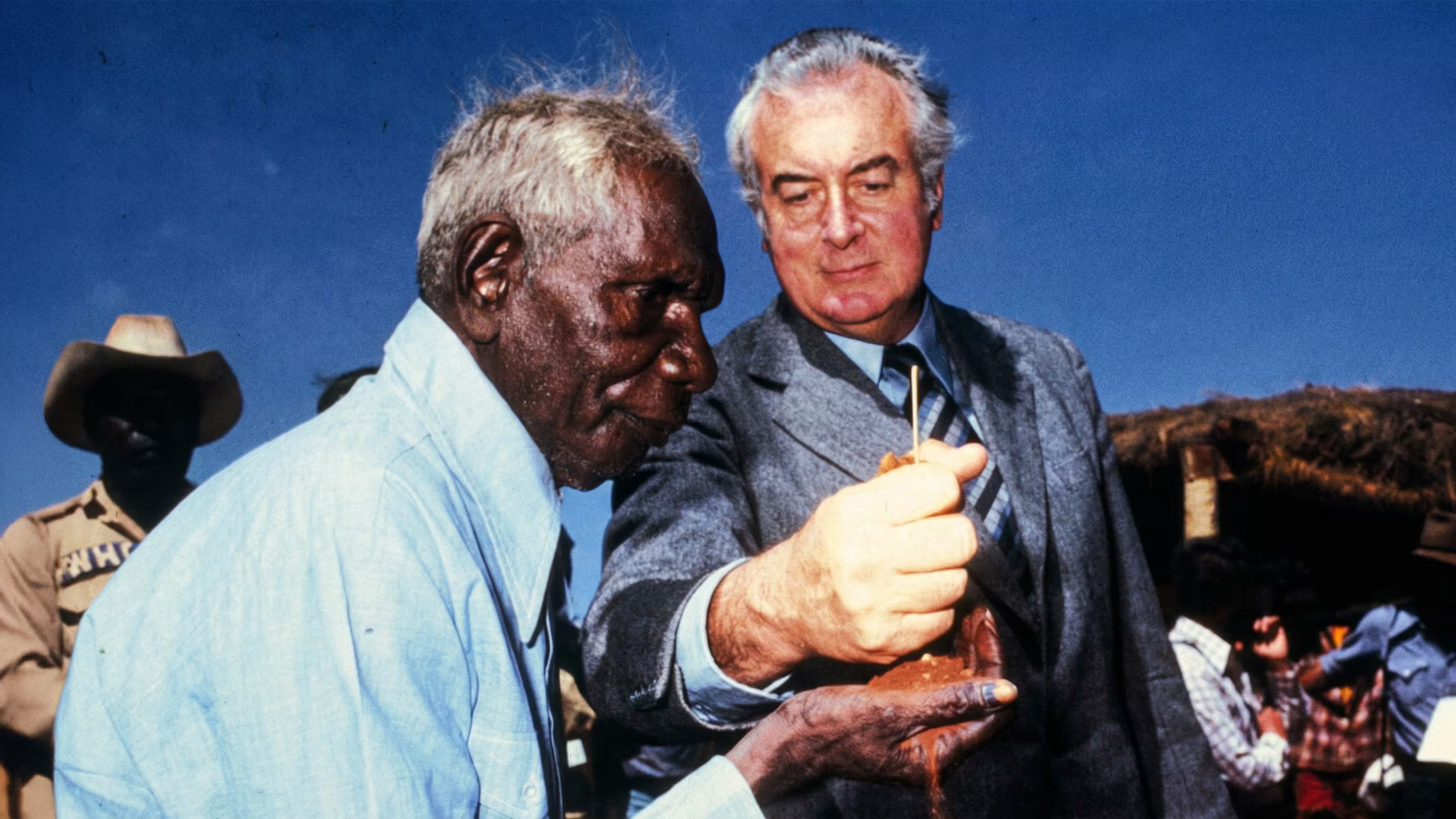
The election of the Whitlam Labor government in 1972 proved pivotal. On 16 August 1975, Prime Minister Gough Whitlam travelled to Daguragu for a ceremony that would become one of the most iconic moments in Australian history.
Whitlam poured a handful of red Gurindji soil into Lingiari's cupped hands, declaring: "Vincent Lingiari, I solemnly hand to you these deeds as proof, in Australian law, that these lands belong to the Gurindji people and I put into your hands part of the earth itself as a sign that this land will be the possession of you and your children forever."
Lingiari's response was characteristically understated: "Now we can all be mates."
The photograph of this moment, captured by Mervyn Bishop, has become one of the most significant images in Australian history.
Legacy
The Wave Hill Walk-Off directly led to the Aboriginal Land Rights (Northern Territory) Act 1976—the first legislation in Australia allowing Indigenous people to claim land title based on traditional connection to country.
In June 1976, Vincent Lingiari was appointed a Member of the Order of Australia for his services to Aboriginal people. He passed away on 21 January 1988 at Daguragu, survived by his wife Blanche Nangi and their eight children.
His legacy endures through the federal electorate of Lingiari (covering most of the Northern Territory), the Lingiari Foundation, annual memorial lectures in Darwin, and perhaps most powerfully, through the song "From Little Things Big Things Grow" by Paul Kelly and Kev Carmody—a tribute that ensures new generations continue to learn of his courage and vision.
In September 2020, more than half a century after the walk-off began, the Gurindji people were finally granted native title over the Wave Hill station lands.