Albury-Wodonga
Yaama
Hello
YAH-mah
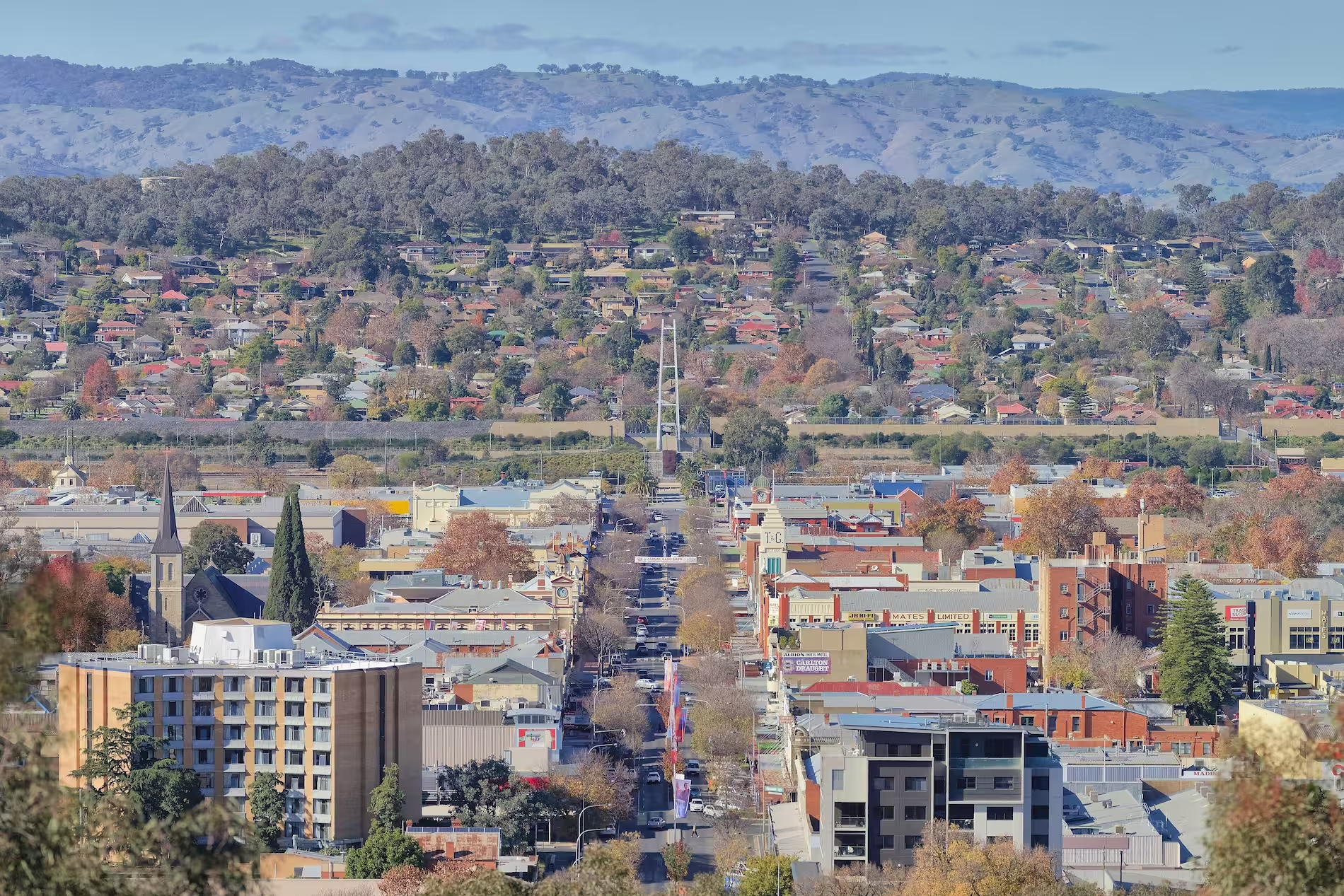
Straddling the Murray River and the New South Wales-Victoria border, Albury-Wodonga sits on the traditional lands of the Wiradjuri people (Albury) and the Waveroo people (Wodonga).
The Wiradjuri people The Wiradjuri people are the largest Aboriginal nation in New South Wales, with traditional lands covering approximately 127,000 square kilometres across the central west of the state. Known as the "People of the Three Rivers," their country is defined by three great waterways: the Wambuul (Macquarie), Kalare (Lachlan), and Murrumbidjeri (Murrumbidgee). The name "Wiradjuri" is derived from "wira" (no/not) and "-djuri" (to have/possess), reflecting a linguistic distinction from neighbouring groups. Wiradjuri culture is guided by the central principle of Yindyamarra — a concept encompassing respect, gentleness, kindness, honour, and the wisdom of living slowly and deliberately. The phrase "Yindyamarra winhanganha" expresses the wisdom of knowing how to live well in a world worth living in. This philosophy underpins Wiradjuri law, social relationships, and connection to country. The Murray River corridor around Albury was a major gathering place where groups would travel hundreds of kilometres for corroboree, initiation, and marriage ceremonies. Today, with a population of approximately 28,000 to 30,000 citizens, the Wiradjuri are one of Australia's largest Aboriginal nations. Mungabareena, a Declared Aboriginal Place near Albury, remains a site of deep cultural significance. The Wiradjuri language is being actively revitalised through community programs, school curricula, and the development of language resources, ensuring this rich culture continues to thrive.
The Waveroo people The Waveroo (also known as Waywurru, the community's preferred modern spelling) are an Aboriginal people of north-eastern Victoria. Their traditional country extends from the Ovens Valley and Kiewa Valley through Wodonga, Beechworth, and Yackandandah to parts of the upper Murray River region. The name "Waveroo" is likely a Kulinic exonym — a name given by neighbouring groups — while "Pallanganmiddang" is used as both a clan name and linguistic designation. Waveroo country encompasses the valleys and ranges of the Victorian alps foothills, where the Ovens and Kiewa rivers provided abundant resources. Two main local groups are recorded: the Pallangan-middang and Tare-re-mittung clans. The region was a place of seasonal gathering, with the rivers and their floodplains supporting rich communities of fish, waterbirds, and plant foods. The proximity to the Murray River made this area a meeting point with neighbouring Wiradjuri people from the New South Wales side. The Waveroo/Waywurru language is classified as extinct, with a surviving vocabulary of approximately 300 words. Despite this loss, the Waywurru Women's Collective and other community members are actively working to share and preserve their language, culture, and history, ensuring that Waywurru identity continues for future generations.
Made with love in Meanjin
Always will be is a privately run, Aboriginal owned and led project that aims to improve the connection people feel to country and the understanding people have about Aboriginal and Torres Strait cultures, history and people.