Mulubinba
Ala
Hello; hey
Ah-lah
Mulubinba is the Awabakal name for the Newcastle area, situated where the Hunter River meets the sea. The Awabakal and Worimi peoples have cared for this coastal country for tens of thousands of years.
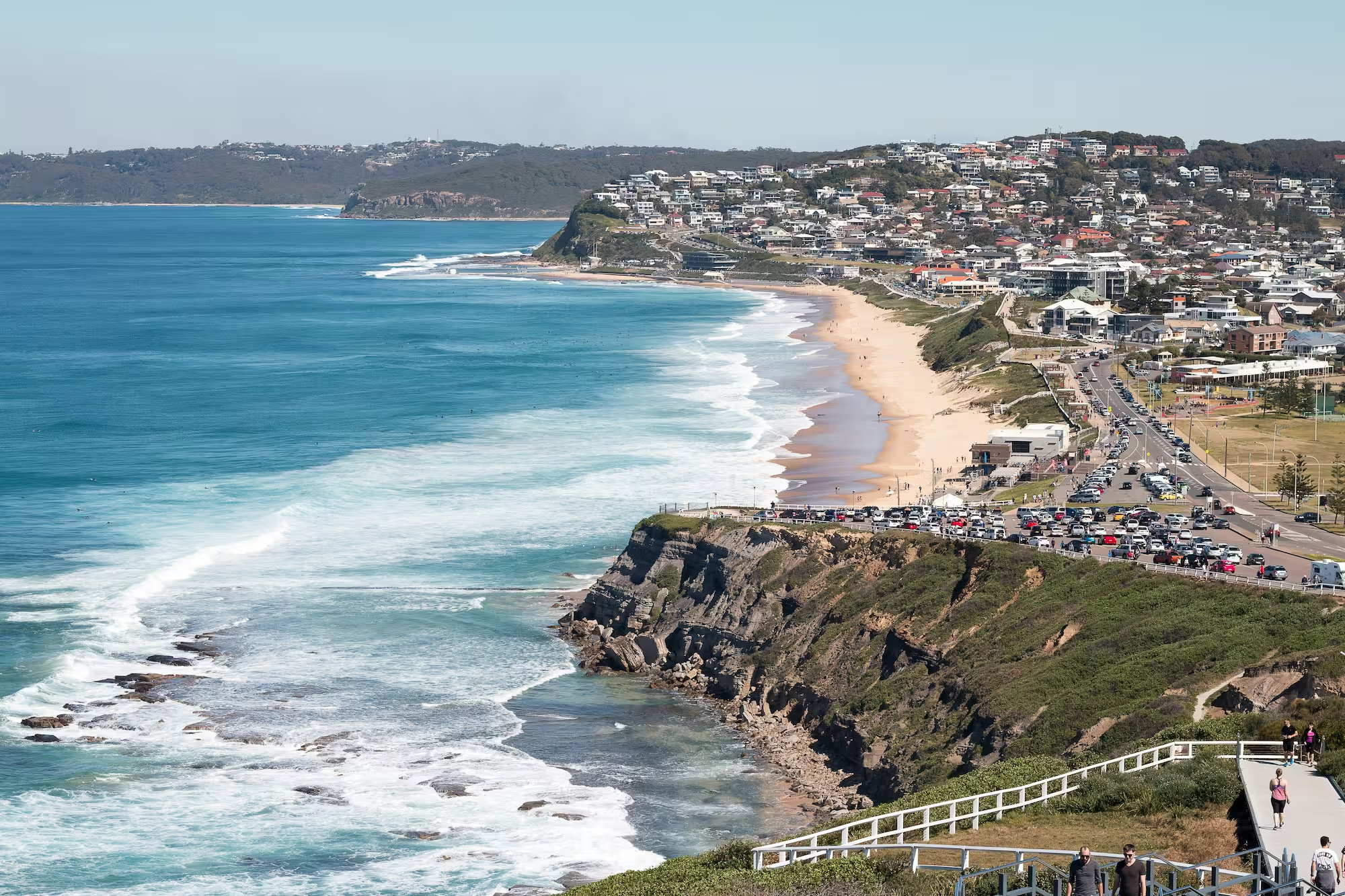
The Awabakal people The Awabakal people are the Traditional Owners of the land and waters around what is now Newcastle, Lake Macquarie, and the surrounding Hunter region in New South Wales. Their country extends along the coastline and includes the shores of Awabakal (Lake Macquarie) — one of the largest coastal saltwater lakes in the southern hemisphere — from which their name derives. The lake and its network of creeks, wetlands, and coastal environments sustained Awabakal families for tens of thousands of years. Fish, shellfish, waterbirds, and plant foods were abundant along the shoreline and in the surrounding bushland. The coal river (Hunter River) and its estuary were important pathways and gathering places. Awabakal people maintained close cultural and kinship ties with neighbouring groups including the Worimi to the north and the Darkinyung to the south. The Awabakal language was one of the first Aboriginal languages to be systematically documented, recorded by missionary Lancelot Threlkeld and Awabakal leader Birabahn in the 1820s–30s. This early record has been invaluable for language revival. Today, the Awabakal people maintain their cultural heritage through organisations including the Awabakal Local Aboriginal Land Council and the Miromaa Aboriginal Language and Technology Centre, which leads language revitalisation work.
The Worimi people The Worimi people are the Traditional Owners of a large area of coastal country north of Newcastle, stretching from the Hunter River to the Manning River and inland to the Barrington Tops. Their country includes Port Stephens, the Great Lakes, and the spectacular Stockton Bight sand dunes — the largest moving coastal sand dunes in the southern hemisphere, which hold deep cultural significance. Worimi country encompasses a rich variety of environments: ocean beaches, estuaries, coastal lakes, wetlands, forests, and mountain ranges. These diverse landscapes provided abundant resources and sustained a complex society with deep seasonal knowledge. The Stockton Bight dunes contain thousands of archaeological sites, including middens and stone tool scatters, providing evidence of continuous occupation stretching back many thousands of years. Today, the Worimi people are actively involved in land management and cultural heritage protection across their traditional lands. The Worimi Conservation Lands, co-managed with the NSW Government, protect a significant stretch of the Stockton Bight dunes and provide cultural tourism experiences. Worimi language and cultural practices continue to be maintained and shared through community organisations and education programs.
Made with love in Meanjin
Always will be is a privately run, Aboriginal owned and led project that aims to improve the connection people feel to country and the understanding people have about Aboriginal and Torres Strait cultures, history and people.